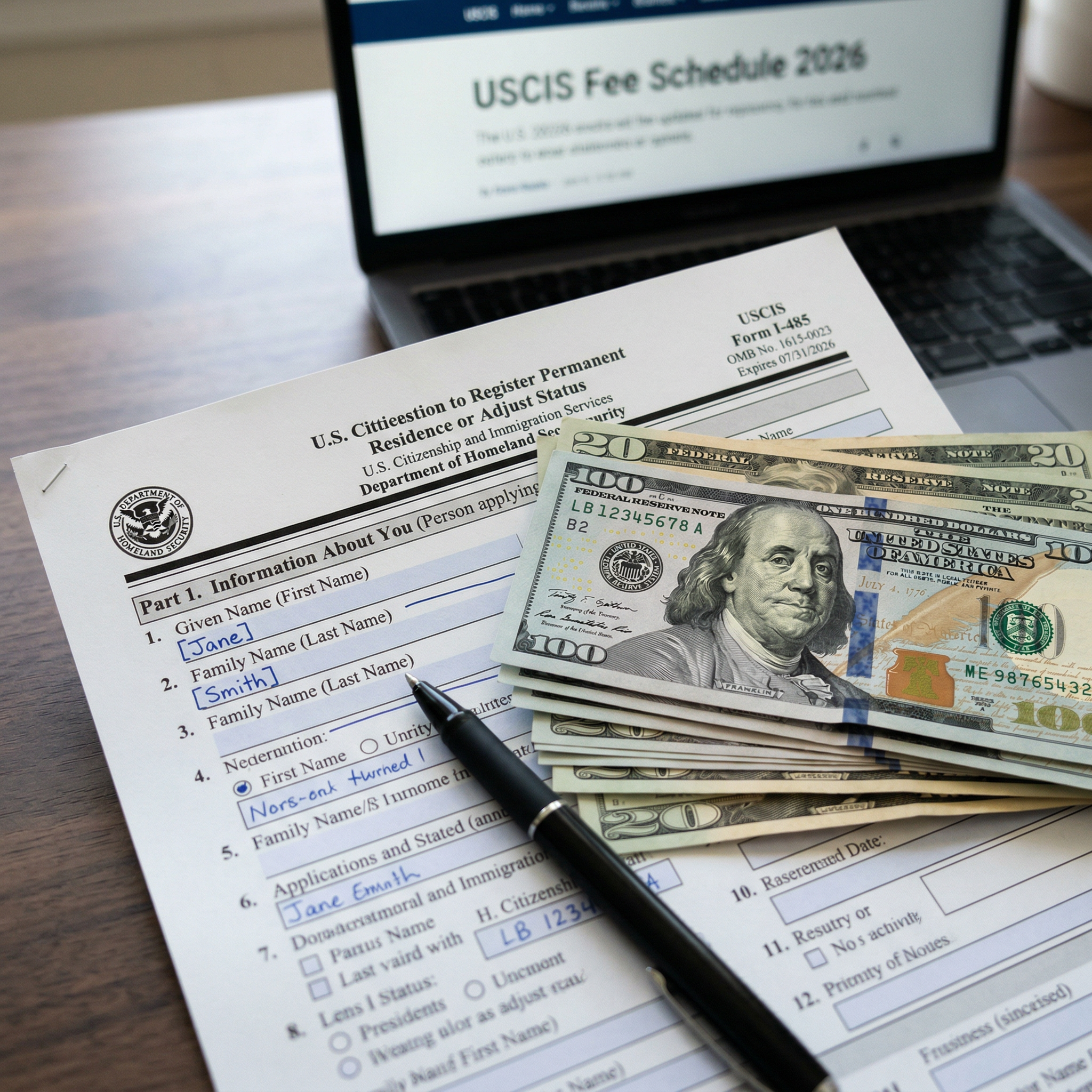
U.S. Citizenship and Immigration Services has implemented a revised fee schedule effective January 2026, affecting virtually all immigration benefit applications. The changes reflect the agency's push toward full cost recovery while preserving access to fee waiver provisions.
Notable Fee Changes
Increases
- Form I-130 (Petition for Alien Relative): Increased from $535 to $625
- Form I-485 (Adjustment of Status): Increased from $1,225 to $1,440
- Form N-400 (Naturalization): Increased from $710 to $820
- Form I-140 (Immigrant Worker Petition): Premium processing fee increased to $2,805
New Provisions
- Expanded fee waiver eligibility for certain humanitarian categories
- New reduced-fee options for applicants below 200% of the federal poverty level
- Consolidated biometric fee into application fees (eliminating separate biometric appointments in some cases)
Impact Assessment
The fee increases represent an average 15-20% rise across most categories, which the agency states is necessary to fund processing improvements and reduce backlogs. Critics have argued that the increases disproportionately burden lower-income applicants.
Planning Considerations
Applicants should factor the new fees into their immigration planning and budget. Those eligible for fee waivers should review the updated criteria, as the expansion of waiver eligibility may offset the increased costs for qualifying individuals.